'%3e%3cpath%20fill='red'%20d='M0%200h720v480H0z'/%3e%3cpath%20fill='%23000095'%20d='M0%200h360v240H0z'/%3e%3cg%20fill='%23fff'%3e%3cpath%20d='m154%20126.9-2.5%209.6%209.4%202.6-1.8-7.1zm46.9%205.1-1.8%207.1%209.4-2.6-2.5-9.6zm-41.8-24-5.1%205.1%201.9%206.9z'/%3e%3cpath%20d='m155.9%20120-1.9%206.9%205.1%205.1z'/%3e%3cpath%20d='m154%20113.1-6.9%206.9%206.9%206.9%201.9-6.9zm14%2027.8%205.1%205.1%206.9-1.9zm18.9%205.1%209.6%202.5%202.6-9.4-7.1%201.8z'/%3e%3cpath%20d='m192%20140.9%207.1-1.8%201.8-7.1zm-31.1-1.8%202.6%209.4%209.6-2.5-5.1-5.1zm19.1%205%206.9%201.9%205.1-5.1z'/%3e%3cpath%20d='m173.1%20146%206.9%206.9%206.9-6.9-6.9-1.9zm-12.2-45.1-9.4%202.6%202.5%209.6%205.1-5.1zm-1.8%2031.1%201.8%207.1%207.1%201.8zm45-12%201.9-6.9-5.1-5.1z'/%3e%3cpath%20d='m168%2099.1-7.1%201.8-1.8%207.1zm32.9%208.9-1.8-7.1-7.1-1.8zm5.1%2018.9%206.9-6.9-6.9-6.9-1.9%206.9z'/%3e%3cpath%20d='m200.9%20108-8.9-8.9-12-3.2-12%203.2-8.9%208.9-3.2%2012%203.2%2012%208.9%208.9%2012%203.2%2012-3.2%208.9-8.9%203.2-12z'/%3e%3cpath%20d='m200.9%20132%205.1-5.1-1.9-6.9zm5.1-18.9%202.5-9.6-9.4-2.6%201.8%207.1zm-6.9-12.2-2.6-9.4-9.6%202.5%205.1%205.1zm-26-6.9-9.6-2.5-2.6%209.4%207.1-1.8zm6.9%201.9-6.9-1.9-5.1%205.1z'/%3e%3cpath%20d='m186.9%2094-6.9-6.9-6.9%206.9%206.9%201.9z'/%3e%3cpath%20d='m192%2099.1-5.1-5.1-6.9%201.9zM173.1%20146l-9.6%202.5%204.5%2016.6%2012-12.2zm-5.1%2019.1%2012%2044.9%2012-44.9-12-12.2zm-7.1-26-9.4-2.6-4.4%2016.4%2016.4-4.4z'/%3e%3cpath%20d='m147.1%20152.9-12%2045.1%2032.9-32.9-4.5-16.6zm-12-20.9L102%20165.1l45.1-12.2%204.4-16.4z'/%3e%3cpath%20d='m154%20126.9-6.9-6.9-12%2012%2016.4%204.5zm0-13.8-2.5-9.6-16.4%204.5%2012%2012z'/%3e%3cpath%20d='M135.1%20108%2090%20120l45.1%2012%2012-12zm90%2024-16.6%204.5%204.4%2016.4%2045.1%2012.2z'/%3e%3cpath%20d='m199.1%20139.1-2.6%209.4%2016.4%204.4-4.4-16.4zm-12.2%206.9-6.9%206.9%2012%2012.2%204.5-16.6zm19.1-19.1%202.5%209.6%2016.6-4.5-12.2-12z'/%3e%3cpath%20d='m192%20165.1%2033.1%2032.9-12.2-45.1-16.4-4.4zm7.1-64.2%209.4%202.6%204.4-16.4-16.4%204.4z'/%3e%3cpath%20d='M225.1%20108%20258%2075.1l-45.1%2012-4.4%2016.4zm-12.2-20.9L225.1%2042%20192%2075.1l4.5%2016.4zm12.2%2044.9%2044.9-12-44.9-12-12.2%2012z'/%3e%3cpath%20d='m206%20113.1%206.9%206.9%2012.2-12-16.6-4.5zm-38-38L135.1%2042l12%2045.1%2016.4%204.4z'/%3e%3cpath%20d='m160.9%20100.9%202.6-9.4-16.4-4.4%204.4%2016.4z'/%3e%3cpath%20d='m147.1%2087.1-45.1-12%2033.1%2032.9%2016.4-4.5zm39.8%206.9%209.6-2.5-4.5-16.4-12%2012z'/%3e%3cpath%20d='M192%2075.1%20180%2030l-12%2045.1%2012%2012z'/%3e%3cpath%20d='m173.1%2094%206.9-6.9-12-12-4.5%2016.4z'/%3e%3c/g%3e%3ccircle%20cx='180'%20cy='120'%20r='51.1'%20fill='%23000095'/%3e%3ccircle%20cx='180'%20cy='120'%20r='45.1'%20fill='%23fff'/%3e%3c/g%3e%3c/svg%3e)
'%20d='m0%200%2016%2011h61%2061%2061%2061%2060L47%2037h61%2061%2060%2061L16%2063h61%2061%2061%2061%2060L47%2089h61%2061%2060%2061L16%20115h61%2061%2061%2061%2060L47%20141h61%2061%2060%2061L16%20166h61%2061%2061%2061%2060L47%20192h61%2061%2060%2061L16%20218h61%2061%2061%2061%2060L0%200'/%3e%3c/svg%3e)

'%20d='M-50-12v24m6%200v-24m6%200v24m76%200V1m0-2v-11m6%200v11m0%202v11m6%200V1m0-2v-11'/%3e%3cpath%20transform='rotate(-33.69006752598)'%20d='M-50-12v24m6%200V1m0-2v-11m6%200v24m76%200V1m0-2v-11m6%200v24m6%200V1m0-2v-11'/%3e%3c/g%3e%3cg%20transform='rotate(33.69006752598)'%3e%3cpath%20fill='%23cd2e3a'%20d='M12%200a18%2018%200%2011-36%200%2024%2024%200%201148%200'/%3e%3cpath%20fill='%230047a0'%20d='M0%200a12%2012%200%201124%200%2024%2024%200%2011-48%200%2012%2012%200%201024%200'/%3e%3c/g%3e%3c/svg%3e)


- Self-Drive Tour
Carpooling, Self-Drive Rentals, Ride-Sharing and Hitching a Ride: A New Money-Saving Win-Win Choice

固得編輯
2025 / 10 / 04
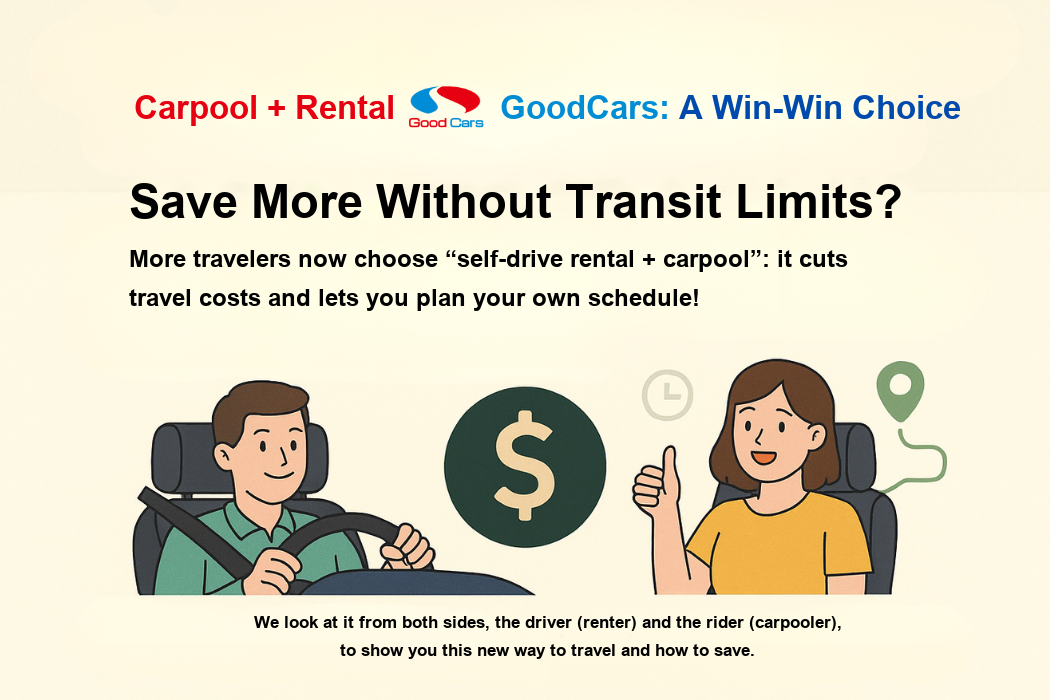
Table of Contents
🚗 [Carpooling in a Rental Car] A Win-Win Choice! Money-Saving Tips from Both the Driver's and the Passenger's Side
Want to save money with self-drive carpooling without being tied to public transport? More and more people are choosing carpooling in a rental car — it cuts travel costs and lets you plan your trip freely! This article looks at both sides, the driver (the renter) and the passengers (the carpoolers), to explain the benefits of self-drive carpooling and how it saves you money.
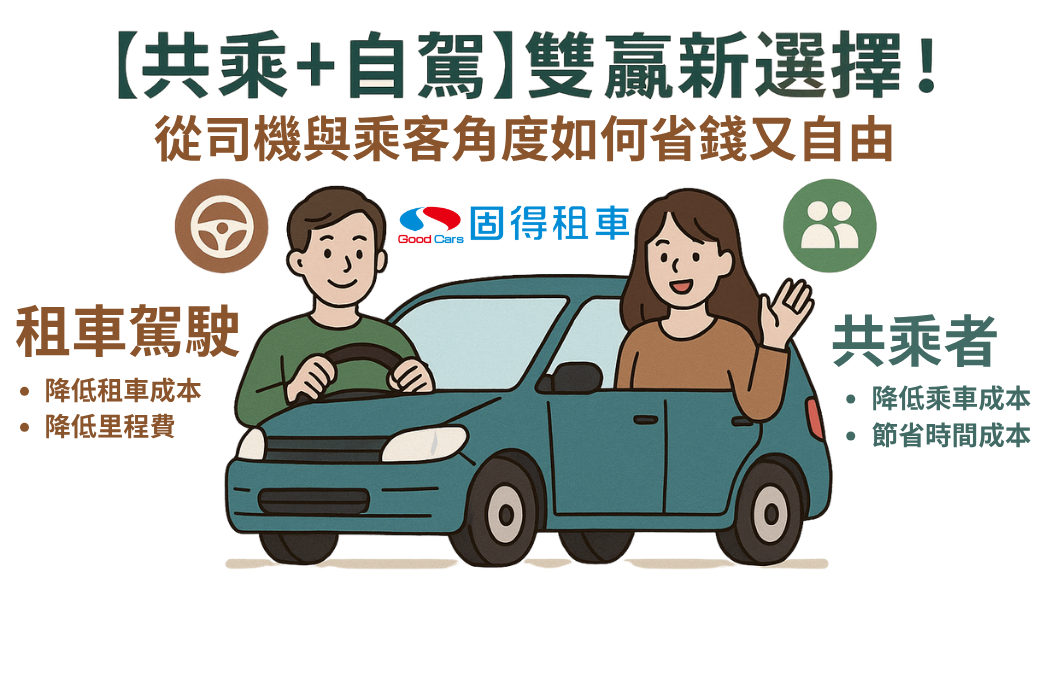
👨✈️ The Driver's View: How to Share Costs Fairly When Carpooling in a Rental Car
For the renter, carpooling in a rental car lightens the load and keeps you in full control of your trip. Renting on your own means covering the rental fee, the fuel charge and tolls by yourself; when relatives, friends or colleagues heading the same way ride along, everyone can fairly share actual costs such as tolls. And GoodCars rentals come with a dedicated fuel card, with fuel already included in the fuel charge, so the renter doesn't pay for fuel separately — and there's no fuel bill to split with your passengers.
- No more shouldering every cost alone: actual costs such as tolls can be fairly shared with the people riding with you.
- No separate fuel cost: GoodCars rentals come with a dedicated fuel card and fuel is included in the fuel charge, so the renter doesn't pay for fuel separately.
- Room for everyone: for a bigger group you can choose a 7-seater and bring everyone in one car — easier than traveling separately.
- Full control of your itinerary: plan your own route, stop wherever you like and set off whenever you want.
| Cost item | How it's calculated | How it's shared when carpooling |
|---|---|---|
| Rental fee | Varies by car type, location and date; see the online quote on the GoodCars website | Paid by the renter |
| Fuel charge | Charged by the kilometers actually driven, with fuel included (fuel charge details) | Paid by the renter; the car comes with a dedicated fuel card, so there's no separate fuel cost |
| Tolls | Every car has ETC; tolls are settled when you return the car | Can be fairly shared by the carpoolers |
🧍♀️ The Passenger's View: Share Actual Costs, Get a Comfortable Direct Ride
For passengers, self-drive carpooling is a new way to travel that combines comfort and flexibility — no changing between vehicles, and you only share actual costs such as tolls. Here are the most common benefits for passengers:
- More flexible: once the plan is agreed, you can choose a convenient pickup and drop-off point and travel along the driver's route instead of a fixed timetable.
- Transparent costs: no fare is charged — you only fairly share actual costs such as tolls, agreed before you set off.
- Comfortable, no transfers: ideal for families and travelers with luggage — one ride all the way.
- Arranged among yourselves: relatives, friends, colleagues or fellow travelers on the same route arrange the trip together on their own initiative.
📌 Real Example: Taipei → Cingjing Farm
| Transport | Time | Cost | Drawbacks |
|---|---|---|---|
| Train + intercity bus | About 4.5 hours | Train and bus fares, with each person buying their own ticket | Two transfers; time-consuming |
| Self-drive carpool | About 3 hours | Rental fee + fuel charge (see the online quote); carpoolers share the tolls | Direct with no transfers; comfortable and convenient |
➡️ Save nearly 1.5 hours, go direct with no transfers and travel more comfortably — self-drive carpooling is the smarter choice!
🔧 How Does Self-Drive Carpooling Work? 3 Simple Steps
- The renter creates a carpool trip (setting the departure point, time and destination)
- Invite relatives, friends, colleagues or fellow travelers on the same route, arranging the trip together on your own initiative
- Agree before departure on sharing actual costs such as tolls, and you're ready to set off together!
Conclusion: Choose Self-Drive Carpooling and Make Every Kilometer Count!
Self-drive carpooling lets everyone fairly share actual costs such as tolls, and with a GoodCars dedicated fuel card, fuel is already included in the fuel charge. For passengers, it's also a comfortable, affordable and flexible new way to get around. Stick to the principles of non-profit, voluntarily arranged trips and no more than two trips a day, and set off together on a win-win journey!
📚 Legal Note: What Counts as Legal Carpooling?
According to Ministry of Transportation and Communications (MOTC) Letter No. 1075002889 (交路字第1075002889號函), issued on Mar 15, 2018 (ROC year 107), the legality of "private-car carpooling" is defined as follows:
- Carpooling must be a necessary trip arising from the driver's own social or economic activities, initiated voluntarily by the driver or passengers, as a non-profit act of mutual help.
- Passengers may only share energy costs and tolls; no other fees may be charged, and there must be no characteristics of a commercial operation.
- Carpooling is limited to two trips per day; it may not be operated intensively or repeatedly, otherwise it violates the regulations.
✅ In other words, self-drive carpooling is legal as long as it follows the principles of "non-profit, voluntarily initiated, two trips per day, sharing actual costs only", so both passengers and drivers can carpool with confidence!
Carpooling FAQ
❓ What does carpooling mean?
"Carpooling" means several passengers riding in the same vehicle to the same or nearby destinations, to share fuel costs, reduce traffic congestion and help the environment. It comes in two main forms:
- Private-car carpooling: non-profit; the driver and passengers share the fuel and toll costs.
- Platform ridesharing: an app matches drivers with passengers for paid rides. This is a commercial service that must be run by licensed operators (such as taxis); private cars and rental cars may not be used to carry passengers for a fee.
✅ What are the benefits of carpooling?
- Lower costs: under the rules, carpoolers can share energy costs and tolls, reducing each person's travel costs; with a GoodCars rental, fuel is already included in the fuel charge, so sharing the tolls is all it takes.
- Greener travel: fewer cars on the road means lower carbon emissions and less congestion.
- Fills transport gaps: a flexible alternative in areas without MRT or bus service.
🚗 What types of carpooling are there?
- Private-car carpooling: the driver shares the car with relatives, friends, colleagues or neighbors who have the same travel needs, only sharing costs and not for profit.
- Shared taxis / platform ridesharing: paid rides matched through an app, similar to Uber or other ride-hailing apps. These must be run by licensed operators — it's not something a private car or rental car can do.
⚠️ Are there legal restrictions on carpooling?
According to the MOTC interpretation letter of Mar 15, 2018 (ROC year 107) (Letter No. 1075002889), private-car carpooling must follow these principles:
- It must not be for profit; only fuel costs and tolls may be shared.
- It must be a necessary trip arising from the driver's or passengers' own social or economic activities.
- It is limited to two trips per day and must not be driven so intensively that it takes on the characteristics of a business.
📍 Is carpooling legal in Taiwan?
Yes. Private-car carpooling is legal as long as it meets the following conditions:
- The driver is not doing it for profit.
- The trip arises from social or economic activity needs.
- Passengers only share actual costs, such as fuel and tolls.
- No more than two trips per day.
✅ Self-drive carpooling that follows the principles above is permitted and protected by law in Taiwan.
Related Suggestions
- Self-Drive Tour