'%3e%3cpath%20fill='red'%20d='M0%200h720v480H0z'/%3e%3cpath%20fill='%23000095'%20d='M0%200h360v240H0z'/%3e%3cg%20fill='%23fff'%3e%3cpath%20d='m154%20126.9-2.5%209.6%209.4%202.6-1.8-7.1zm46.9%205.1-1.8%207.1%209.4-2.6-2.5-9.6zm-41.8-24-5.1%205.1%201.9%206.9z'/%3e%3cpath%20d='m155.9%20120-1.9%206.9%205.1%205.1z'/%3e%3cpath%20d='m154%20113.1-6.9%206.9%206.9%206.9%201.9-6.9zm14%2027.8%205.1%205.1%206.9-1.9zm18.9%205.1%209.6%202.5%202.6-9.4-7.1%201.8z'/%3e%3cpath%20d='m192%20140.9%207.1-1.8%201.8-7.1zm-31.1-1.8%202.6%209.4%209.6-2.5-5.1-5.1zm19.1%205%206.9%201.9%205.1-5.1z'/%3e%3cpath%20d='m173.1%20146%206.9%206.9%206.9-6.9-6.9-1.9zm-12.2-45.1-9.4%202.6%202.5%209.6%205.1-5.1zm-1.8%2031.1%201.8%207.1%207.1%201.8zm45-12%201.9-6.9-5.1-5.1z'/%3e%3cpath%20d='m168%2099.1-7.1%201.8-1.8%207.1zm32.9%208.9-1.8-7.1-7.1-1.8zm5.1%2018.9%206.9-6.9-6.9-6.9-1.9%206.9z'/%3e%3cpath%20d='m200.9%20108-8.9-8.9-12-3.2-12%203.2-8.9%208.9-3.2%2012%203.2%2012%208.9%208.9%2012%203.2%2012-3.2%208.9-8.9%203.2-12z'/%3e%3cpath%20d='m200.9%20132%205.1-5.1-1.9-6.9zm5.1-18.9%202.5-9.6-9.4-2.6%201.8%207.1zm-6.9-12.2-2.6-9.4-9.6%202.5%205.1%205.1zm-26-6.9-9.6-2.5-2.6%209.4%207.1-1.8zm6.9%201.9-6.9-1.9-5.1%205.1z'/%3e%3cpath%20d='m186.9%2094-6.9-6.9-6.9%206.9%206.9%201.9z'/%3e%3cpath%20d='m192%2099.1-5.1-5.1-6.9%201.9zM173.1%20146l-9.6%202.5%204.5%2016.6%2012-12.2zm-5.1%2019.1%2012%2044.9%2012-44.9-12-12.2zm-7.1-26-9.4-2.6-4.4%2016.4%2016.4-4.4z'/%3e%3cpath%20d='m147.1%20152.9-12%2045.1%2032.9-32.9-4.5-16.6zm-12-20.9L102%20165.1l45.1-12.2%204.4-16.4z'/%3e%3cpath%20d='m154%20126.9-6.9-6.9-12%2012%2016.4%204.5zm0-13.8-2.5-9.6-16.4%204.5%2012%2012z'/%3e%3cpath%20d='M135.1%20108%2090%20120l45.1%2012%2012-12zm90%2024-16.6%204.5%204.4%2016.4%2045.1%2012.2z'/%3e%3cpath%20d='m199.1%20139.1-2.6%209.4%2016.4%204.4-4.4-16.4zm-12.2%206.9-6.9%206.9%2012%2012.2%204.5-16.6zm19.1-19.1%202.5%209.6%2016.6-4.5-12.2-12z'/%3e%3cpath%20d='m192%20165.1%2033.1%2032.9-12.2-45.1-16.4-4.4zm7.1-64.2%209.4%202.6%204.4-16.4-16.4%204.4z'/%3e%3cpath%20d='M225.1%20108%20258%2075.1l-45.1%2012-4.4%2016.4zm-12.2-20.9L225.1%2042%20192%2075.1l4.5%2016.4zm12.2%2044.9%2044.9-12-44.9-12-12.2%2012z'/%3e%3cpath%20d='m206%20113.1%206.9%206.9%2012.2-12-16.6-4.5zm-38-38L135.1%2042l12%2045.1%2016.4%204.4z'/%3e%3cpath%20d='m160.9%20100.9%202.6-9.4-16.4-4.4%204.4%2016.4z'/%3e%3cpath%20d='m147.1%2087.1-45.1-12%2033.1%2032.9%2016.4-4.5zm39.8%206.9%209.6-2.5-4.5-16.4-12%2012z'/%3e%3cpath%20d='M192%2075.1%20180%2030l-12%2045.1%2012%2012z'/%3e%3cpath%20d='m173.1%2094%206.9-6.9-12-12-4.5%2016.4z'/%3e%3c/g%3e%3ccircle%20cx='180'%20cy='120'%20r='51.1'%20fill='%23000095'/%3e%3ccircle%20cx='180'%20cy='120'%20r='45.1'%20fill='%23fff'/%3e%3c/g%3e%3c/svg%3e)
'%20d='m0%200%2016%2011h61%2061%2061%2061%2060L47%2037h61%2061%2060%2061L16%2063h61%2061%2061%2061%2060L47%2089h61%2061%2060%2061L16%20115h61%2061%2061%2061%2060L47%20141h61%2061%2060%2061L16%20166h61%2061%2061%2061%2060L47%20192h61%2061%2060%2061L16%20218h61%2061%2061%2061%2060L0%200'/%3e%3c/svg%3e)

'%20d='M-50-12v24m6%200v-24m6%200v24m76%200V1m0-2v-11m6%200v11m0%202v11m6%200V1m0-2v-11'/%3e%3cpath%20transform='rotate(-33.69006752598)'%20d='M-50-12v24m6%200V1m0-2v-11m6%200v24m76%200V1m0-2v-11m6%200v24m6%200V1m0-2v-11'/%3e%3c/g%3e%3cg%20transform='rotate(33.69006752598)'%3e%3cpath%20fill='%23cd2e3a'%20d='M12%200a18%2018%200%2011-36%200%2024%2024%200%201148%200'/%3e%3cpath%20fill='%230047a0'%20d='M0%200a12%2012%200%201124%200%2024%2024%200%2011-48%200%2012%2012%200%201024%200'/%3e%3c/g%3e%3c/svg%3e)


Kansai Self-Drive Routes: Wakayama, Shirahama and Awaji Island — Why You Should Not Combine Them
The two drives worth renting a car for in Kansai run in opposite directions: south to Wakayama and Nanki-Shirahama, or north-west across the water to Awaji Island. Every season GoodCars sees the same itinerary — both routes, same day. This guide does not repeat the "should I even rent in Kansai" question (our complete Kansai car rental guide covers that). Instead it breaks both routes down to the level that actually decides whether your day works: leg-by-leg driving, parking capacity at each stop, and the hard cut-off times. Distance is rarely the problem in Kansai. Capacity and timing are.

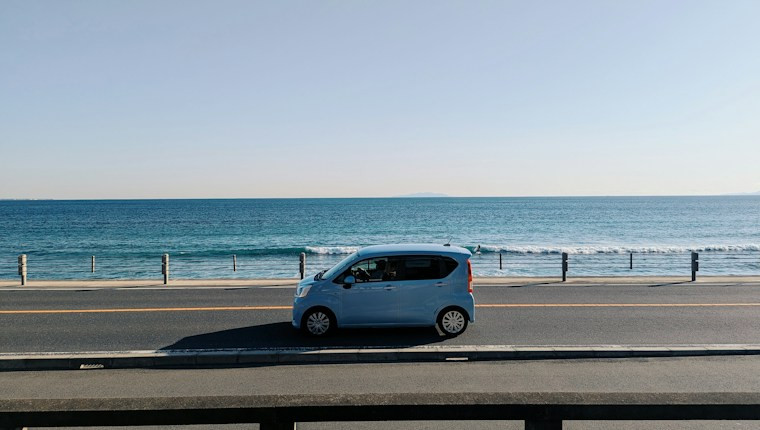
The part of Kansai worth driving starts the moment you leave the cities (illustrative image)
First conclusion: these are opposite directions, not one trip
Get the geography straight and every scheduling rule below follows from it. Kansai Airport sits on the southern rim of Osaka Bay. Wakayama is directly south of it. Awaji Island is north-west, on the far side of the bay. There is no shortcut between them — by road you must loop back through Osaka and Kobe, which means spending a driving day returning to where you started.
| Route | Direction from the airport | What it is for | GoodCars suggests |
|---|---|---|---|
| Wakayama / Nanki-Shirahama | Due south | Sea cliffs, hot springs, safari park | Two days, one night |
| Awaji Island | North-west, via Kobe | Bridges, whirlpools, flower parks | A long day trip, timed to the tide |
| Amanohashidate / north Kyoto | North — a third direction | The "sea side" of Kyoto | A separate trip entirely |
The GoodCars rule of thumb: on a Kansai trip of three days or less, pick one. If you genuinely want both, put Awaji on your arrival or departure day — it is close to Kobe and fits the airport corridor — and keep the Wakayama run as its own overnight.
The Shirahama run: tolled first, free later, and the variable is night closures

The final stretch south runs through continuous tunnels — also where overnight maintenance closures happen (illustrative image)
This route has a structure most visitors do not expect: the tolled section comes first and the free section comes last. Heading south from Kansai Airport you take the Hanwa Expressway (tolled) as far as Nanki-Tanabe IC. Past that point you are on the Kisei Expressway, which is a toll-free section, currently open through to Susami-minami IC — and Nanki-Shirahama IC sits inside that free stretch.
| Leg | Status | GoodCars note |
|---|---|---|
| Kansai Airport → Nanki-Tanabe IC | Hanwa Expressway (tolled) | Where almost all of your tolls are spent — rent an ETC card |
| Nanki-Tanabe IC → Nanki-Shirahama IC | Kisei Expressway (free) | No charge, but tunnel after tunnel |
| Nanki-Shirahama IC → Susami-minami IC | Kisei Expressway (free) | Only needed if you continue toward Kushimoto |
⚠️ Free does not mean always open. The toll-free Kisei Expressway section is subject to overnight closures for tunnel equipment inspection, with traffic diverted onto National Route 42. That is a mountain road with the tunnels taken away, so the detour costs real time. GoodCars recommends scheduling the long transit in daylight and checking the published night-works notices before you set off.
It is also why GoodCars does not recommend Shirahama as a day trip: you would have to dodge night-works restrictions in both directions, leaving only the middle of the day to actually see anything. Leg distances and overall drive times are tabulated in our complete Kansai car rental guide.
Shirahama's real constraint: 30 spaces at Sandanbeki, none at Shirarahama

Nanki's signature coastline photographs beautifully — and every viewpoint has a tiny car park (illustrative image)
Shirahama's sights sit close together, mostly within ten minutes of each other. The scheduling difficulty is therefore not distance. It is parking. Here is what GoodCars wants you to know before you arrive:
| Stop | Parking | Capacity | What it means in practice |
|---|---|---|---|
| Sandanbeki cliffs | Town-run lot, free | About 30 standard cars | One tour coach fills it; expect a queue at peak |
| Senjojiki rock platform | Free | About 70 cars | Tightest at sunset and on long weekends |
| Engetsu Island viewpoint | Paid lots nearby | — | Narrow road; do not stop on the shoulder for photos |
| Shirarahama beach | No dedicated car park | — | Roadside parking prohibited; nearby lots charge in summer |
Thirty spaces at Sandanbeki is the single most useful number on this page. It means the site has no elasticity: once the lot is full you are waiting at the entrance. GoodCars suggests making Sandanbeki either your first stop of the morning or your last of the evening, well away from the 11:00–14:00 coach window.

Shirarahama has no car park of its own, and in summer there is very little free parking nearby (illustrative image)
Car parks around the beach switch to paid operation in high summer (roughly mid-July to late September), commonly in the region of 2,000 yen per entry, and free alternatives essentially disappear in that window. Just as important: parking on the surrounding streets is prohibited. If the beach is the point of your trip, GoodCars suggests booking a hotel within walking distance and leaving the car in the hotel's own lot.
The one place that closes: 17:00, and most Wednesdays

The only stop on this route with both a parking fee and a closing time (illustrative image)
When GoodCars plans a route, we look for two answers first: which stop is the only one that closes, and which is the only one you pay to park at. In Shirahama they are the same place — Adventure World.
- Open 10:00–17:00, with seasonal variation and occasional special evening operation. It is the only hard cut-off on the route.
- Closed days cluster on Wednesdays. Visitors who schedule Shirahama midweek to dodge crowds often land exactly on a closure.
- Parking runs around 1,200 yen per day across roughly five thousand spaces, on a gateless plate-recognition system that allows same-day re-entry.
- The car park opens before the park does — commonly from around 07:00 against a 10:00 opening — so arriving early to secure a space works.
Put those four facts together and the two-day Shirahama skeleton writes itself: afternoon one, drive down and do the coastal viewpoints (small car parks, but no closing time); morning two, Adventure World (closing time, paid parking); afternoon two, drive back north. Reverse the order and you spend the whole trip racing a clock.
See GoodCars Kansai Airport rental options
Awaji Island: how the bridge tolls work, and the second bridge nobody budgets for

The Akashi Kaikyo Bridge gets you onto the island — but it is not the only toll bridge on this route (illustrative image)
The first bridge is the Akashi Kaikyo Bridge (Tarumi IC ⇄ Awaji IC). Its pricing logic is covered in our complete Kansai car rental guide — the gap between the ETC and cash rates is more than double, which is why GoodCars always recommends adding an ETC card. What that guide does not cover is the part people miss: there is a second bridge.
Awaji's signature sight is the Naruto whirlpools, and the walkway that lets you look straight down at them is on the Tokushima side. To reach it you cross the Onaruto Bridge from the southern tip of Awaji (Awaji-shima-minami IC ⇄ Naruto-kita IC) — and pay again on the way back.
| Section | Bridge | Standard car, ETC (reference) | Note |
|---|---|---|---|
| Tarumi IC ⇄ Awaji IC | Akashi Kaikyo Bridge | About 910 yen | The cash rate is more than double |
| Awaji-shima-minami IC ⇄ Naruto-kita IC | Onaruto Bridge | Weekday band around 690 yen | Only if you cross to the Tokushima walkway — charged each way |
GoodCars advice: if you simply want to see the whirlpools, staying on Awaji is enough — the roadside station at the island's southern tip is itself a viewing point, with no second bridge required. Only cross if you specifically want the glass-floor view from directly above. Note too that the roadside station generally runs 09:00–17:00 and closes on Thursdays (it may open in peak season), and shifts to an overflow lot with a shuttle when busy.
Awaji's timing lock: the whirlpools run on the tide, not on your itinerary

Whirlpool timing is set by the tide and moves every day — the schedule has to bend around it (illustrative image)
This is what makes the Awaji route different from every other drive in Kansai: it contains a timing lock you cannot negotiate with. The whirlpools are not an "any time during opening hours" sight. They are tidal. They are strongest around spring tides — the days either side of a new or full moon — and the peak moment shifts a little every day. Spring and autumn spring tides run fastest and are widely considered the best windows.
Build the Awaji day backwards. Look up the tide first — cruise operators publish which departures have the best conditions, and the walkway publishes its best viewing windows — decide what time you need to be standing where, then work back to a departure time. Picking the stops first and hoping the tide cooperates fails nine times out of ten.
Both of the route's main paid attractions also have an admission cut-off well before closing — the single most common trap for overseas visitors:
| Facility | Hours | Last admission | Closed |
|---|---|---|---|
| Onaruto Bridge sea walkway (Tokushima side) | Roughly 09:00–18:00 March–September; 09:00–17:00 October–February | 30 minutes before closing | Second Monday of March, June, September and December |
| Akashi Kaikyo National Government Park (Awaji area) | Opens 09:30; closes seasonally between about 16:00 and 18:00 | One hour before closing | Second Monday–Friday of February, plus the new year period |
Parking at the national park is in the 500 yen band for a standard car, across roughly five hundred spaces. Read that alongside the admission cut-offs and the conclusion is blunt: on the Awaji route, your last stop effectively closes an hour early. GoodCars has seen far too many drivers arrive at the gate just after entry stopped.
Putting it together: departure and return times
Combining every timing lock and capacity limit above, here are the two skeletons GoodCars uses. Both assume pick-up and drop-off at Kansai Airport.
| Time | Shirahama (2 days / 1 night) | Awaji (long day trip) |
|---|---|---|
| Morning | Collect at Kansai Airport, head south on the Hanwa Expressway | Early collection, cross the Akashi Kaikyo Bridge via Kobe |
| Midday | Arrive Shirahama, lunch, then Engetsu Island | Northern half of the island (park and coast road) |
| Afternoon | Sandanbeki and Senjojiki, outside the coach peak | Reach the viewing point on the tide |
| Evening | Stay in Shirahama onsen | Recross the bridge with buffer in hand |
| Next morning | Adventure World (opens 10:00, parking paid on entry) | — |
| Next afternoon | Drive back north, return the car at the airport | — |
⚠️ How to size your return buffer. Both routes end at Kansai Airport, and the airport island itself has a fixed cost in time: refuel, hand back, then move to the terminal. GoodCars suggests adding a full hour ahead of your booked return time, plus more again for the commuter peak on the Hanshin Expressway and bayshore route if you have an evening flight. The airport-side logistics and fuel stop locations are in our Kansai Airport pick-up guide; if your trip includes a night in the city, the Osaka car rental guide covers city parking and the Hanshin Expressway.
Pick-up points and the documents you must carry
GoodCars operates six pick-up points in Japan. Both routes on this page start from the Kansai Airport one:
| Pick-up point | Destination cluster | Booking link |
|---|---|---|
| Kansai Airport | Osaka, Kansai, Wakayama, Awaji | View |
| Narita Airport, Chiba | Tokyo and Kanto | View |
| Haneda Airport | Tokyo and Kanto | View |
| New Chitose Airport | Hokkaido | View |
| Fukuoka Airport | Fukuoka and Kyushu | View |
| Naha Airport Station | Okinawa | View |
For most nationalities, driving in Japan requires an International Driving Permit issued under the 1949 Geneva Convention, carried together with your home licence and passport. GoodCars cannot stress this enough: Japan recognises only the 1949 Geneva format. A permit issued in the Vienna Convention format is not valid here, which catches out a steady stream of European visitors every year. A small group of countries and territories instead drive on their home licence plus an official Japanese translation rather than an IDP — Switzerland, Germany, France, Belgium, Monaco and Taiwan among them — and that translation must come from an authorised body such as the Japan Automobile Federation; a translation you produce yourself is not accepted. Driving entitlement runs for one year from your date of entry, or until your licence expires, whichever is shorter. Note that licences issued in mainland China cannot be used to drive in Japan at all, with or without a permit. Full documentation, insurance and left-hand-traffic guidance is in the GoodCars complete guide to renting a car in Japan.
Book your Kansai Airport pick-up with GoodCars
Frequently asked questions
Q1. Can I really not do Wakayama and Awaji on the same day?
You can physically drive it; you should not plan it. They sit due south and north-west of Kansai Airport with Osaka Bay in between, so the road route loops back through Osaka and Kobe and most of the day disappears onto expressways. On a trip of three days or less, GoodCars says pick one.
Q2. How should I budget tolls for the Shirahama run?
The key is the structure: tolled first, free later. Kansai Airport to Nanki-Tanabe IC is the tolled Hanwa Expressway; after that the Kisei Expressway is a free section, and Nanki-Shirahama IC lies inside it. Exact amounts vary by vehicle class and time, so check the operator's official toll search.
Q3. If the Kisei Expressway is free, is it always open?
No. That section closes overnight at times for tunnel equipment inspection, with traffic diverted to National Route 42. GoodCars recommends doing the long transit in daylight and checking the night-works notice before departure.
Q4. Do I have to pay to park at the Shirahama sights?
The coastal viewpoints are mostly free but very small — about thirty spaces at Sandanbeki, about seventy at Senjojiki. The genuinely paid ones are Adventure World (around 1,200 yen per day) and the lots around Shirarahama beach in high summer (commonly around 2,000 yen per entry). The beach itself has no car park, and street parking there is prohibited.
Q5. Which day should Adventure World go on?
Check the closure calendar first — closed days cluster on Wednesdays — and remember the 10:00–17:00 operating window. GoodCars suggests the morning of your second Shirahama day; the car park opens well before the gates, so you can park first and wait.
Q6. Do I need to cross the Onaruto Bridge to see the whirlpools?
No. There is a viewing point at the southern tip of Awaji, so you can see them without leaving the island. The crossing into Tokushima is only worth it if you want the view from the walkway directly above the water, and you pay the toll in both directions.
Q7. How do I find out when the whirlpools will be running?
They follow the tide, so the best moment differs every day. Spring tides around the new and full moon are strongest, and spring and autumn are the best seasons. Check the day's tide table and the operators' published best-viewing windows, then work backwards — GoodCars's method is to fix the arrival time first and the departure time second.
Information currency notice: the tolls, operating hours, closure days, parking capacities and parking charges in this article are reference bands compiled by GoodCars from publicly available information at the time of writing. Japanese pricing, opening hours and traffic regulations are revised periodically; actual amounts and conditions are governed by on-site signage and the official announcements of each facility and expressway operator. Please reconfirm before you travel. Whirlpool timings and night-works notices change daily and must be checked on the day.
Driving eligibility notice: the documents required to drive in Japan depend on where your licence was issued. Most drivers need an International Driving Permit in the 1949 Geneva Convention format, together with their home licence and passport; a permit in the Vienna Convention format is not valid in Japan. A limited group of countries and territories, Taiwan among them, drive instead on their home licence plus an official Japanese translation issued by an authorised body — self-made translations are not accepted. Licences issued in mainland China may not be used to drive in Japan. Entitlement lasts at most one year from your date of entry and never beyond the expiry of the licence or permit itself. Incorrect documents mean refusal at the counter, with no refund.