'%3e%3cpath%20fill='red'%20d='M0%200h720v480H0z'/%3e%3cpath%20fill='%23000095'%20d='M0%200h360v240H0z'/%3e%3cg%20fill='%23fff'%3e%3cpath%20d='m154%20126.9-2.5%209.6%209.4%202.6-1.8-7.1zm46.9%205.1-1.8%207.1%209.4-2.6-2.5-9.6zm-41.8-24-5.1%205.1%201.9%206.9z'/%3e%3cpath%20d='m155.9%20120-1.9%206.9%205.1%205.1z'/%3e%3cpath%20d='m154%20113.1-6.9%206.9%206.9%206.9%201.9-6.9zm14%2027.8%205.1%205.1%206.9-1.9zm18.9%205.1%209.6%202.5%202.6-9.4-7.1%201.8z'/%3e%3cpath%20d='m192%20140.9%207.1-1.8%201.8-7.1zm-31.1-1.8%202.6%209.4%209.6-2.5-5.1-5.1zm19.1%205%206.9%201.9%205.1-5.1z'/%3e%3cpath%20d='m173.1%20146%206.9%206.9%206.9-6.9-6.9-1.9zm-12.2-45.1-9.4%202.6%202.5%209.6%205.1-5.1zm-1.8%2031.1%201.8%207.1%207.1%201.8zm45-12%201.9-6.9-5.1-5.1z'/%3e%3cpath%20d='m168%2099.1-7.1%201.8-1.8%207.1zm32.9%208.9-1.8-7.1-7.1-1.8zm5.1%2018.9%206.9-6.9-6.9-6.9-1.9%206.9z'/%3e%3cpath%20d='m200.9%20108-8.9-8.9-12-3.2-12%203.2-8.9%208.9-3.2%2012%203.2%2012%208.9%208.9%2012%203.2%2012-3.2%208.9-8.9%203.2-12z'/%3e%3cpath%20d='m200.9%20132%205.1-5.1-1.9-6.9zm5.1-18.9%202.5-9.6-9.4-2.6%201.8%207.1zm-6.9-12.2-2.6-9.4-9.6%202.5%205.1%205.1zm-26-6.9-9.6-2.5-2.6%209.4%207.1-1.8zm6.9%201.9-6.9-1.9-5.1%205.1z'/%3e%3cpath%20d='m186.9%2094-6.9-6.9-6.9%206.9%206.9%201.9z'/%3e%3cpath%20d='m192%2099.1-5.1-5.1-6.9%201.9zM173.1%20146l-9.6%202.5%204.5%2016.6%2012-12.2zm-5.1%2019.1%2012%2044.9%2012-44.9-12-12.2zm-7.1-26-9.4-2.6-4.4%2016.4%2016.4-4.4z'/%3e%3cpath%20d='m147.1%20152.9-12%2045.1%2032.9-32.9-4.5-16.6zm-12-20.9L102%20165.1l45.1-12.2%204.4-16.4z'/%3e%3cpath%20d='m154%20126.9-6.9-6.9-12%2012%2016.4%204.5zm0-13.8-2.5-9.6-16.4%204.5%2012%2012z'/%3e%3cpath%20d='M135.1%20108%2090%20120l45.1%2012%2012-12zm90%2024-16.6%204.5%204.4%2016.4%2045.1%2012.2z'/%3e%3cpath%20d='m199.1%20139.1-2.6%209.4%2016.4%204.4-4.4-16.4zm-12.2%206.9-6.9%206.9%2012%2012.2%204.5-16.6zm19.1-19.1%202.5%209.6%2016.6-4.5-12.2-12z'/%3e%3cpath%20d='m192%20165.1%2033.1%2032.9-12.2-45.1-16.4-4.4zm7.1-64.2%209.4%202.6%204.4-16.4-16.4%204.4z'/%3e%3cpath%20d='M225.1%20108%20258%2075.1l-45.1%2012-4.4%2016.4zm-12.2-20.9L225.1%2042%20192%2075.1l4.5%2016.4zm12.2%2044.9%2044.9-12-44.9-12-12.2%2012z'/%3e%3cpath%20d='m206%20113.1%206.9%206.9%2012.2-12-16.6-4.5zm-38-38L135.1%2042l12%2045.1%2016.4%204.4z'/%3e%3cpath%20d='m160.9%20100.9%202.6-9.4-16.4-4.4%204.4%2016.4z'/%3e%3cpath%20d='m147.1%2087.1-45.1-12%2033.1%2032.9%2016.4-4.5zm39.8%206.9%209.6-2.5-4.5-16.4-12%2012z'/%3e%3cpath%20d='M192%2075.1%20180%2030l-12%2045.1%2012%2012z'/%3e%3cpath%20d='m173.1%2094%206.9-6.9-12-12-4.5%2016.4z'/%3e%3c/g%3e%3ccircle%20cx='180'%20cy='120'%20r='51.1'%20fill='%23000095'/%3e%3ccircle%20cx='180'%20cy='120'%20r='45.1'%20fill='%23fff'/%3e%3c/g%3e%3c/svg%3e)
'%20d='m0%200%2016%2011h61%2061%2061%2061%2060L47%2037h61%2061%2060%2061L16%2063h61%2061%2061%2061%2060L47%2089h61%2061%2060%2061L16%20115h61%2061%2061%2061%2060L47%20141h61%2061%2060%2061L16%20166h61%2061%2061%2061%2060L47%20192h61%2061%2060%2061L16%20218h61%2061%2061%2061%2060L0%200'/%3e%3c/svg%3e)

'%20d='M-50-12v24m6%200v-24m6%200v24m76%200V1m0-2v-11m6%200v11m0%202v11m6%200V1m0-2v-11'/%3e%3cpath%20transform='rotate(-33.69006752598)'%20d='M-50-12v24m6%200V1m0-2v-11m6%200v24m76%200V1m0-2v-11m6%200v24m6%200V1m0-2v-11'/%3e%3c/g%3e%3cg%20transform='rotate(33.69006752598)'%3e%3cpath%20fill='%23cd2e3a'%20d='M12%200a18%2018%200%2011-36%200%2024%2024%200%201148%200'/%3e%3cpath%20fill='%230047a0'%20d='M0%200a12%2012%200%201124%200%2024%2024%200%2011-48%200%2012%2012%200%201024%200'/%3e%3c/g%3e%3c/svg%3e)


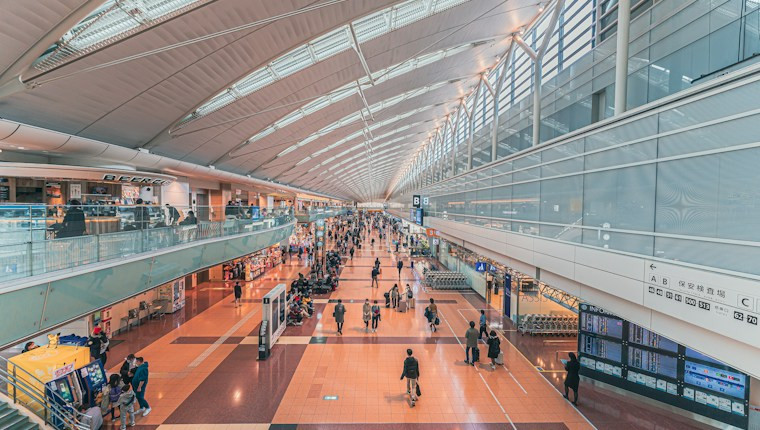
Narita Airport Car Rental Pickup Guide: Free Shuttles and the First Road Out

Narita is the main international gateway into the Tokyo area, and it is the smartest place in the region to start a self-drive trip: the airport sits in Chiba, so you can join the expressway network without ever driving through central Tokyo. Every year, though, travellers get stuck here — looking for a rental desk in Terminal 3 that does not exist, forgetting that the shuttle ride takes another 20 minutes, or landing at midnight to find the rental branches long closed.
The general rental process — booking, documents, vehicle inspection, insurance, drop-off — is already covered in the GoodCars complete guide to renting a car in Japan, so this article does not repeat it. What follows is Narita-specific ground detail: which floor the desks are on, which bus stop number to look for, how much time to allow, how the first stretch of road works, and where to refuel before you return the car.
- Terminal 1 desks: Central Building, 1F; shuttles depart from bus stop 20
- Terminal 2 desks: 1F arrivals lobby, Zone B; shuttles depart from bus stop 29
- Terminal 3 (low-cost carriers) has no rental desks — you must move to Terminal 2 first
- Shuttles are free, but the terminal-to-branch ride runs 15–30 minutes each way
- Desks typically open around 08:00–20:00, so red-eye arrivals cannot collect a car
- Leaving the airport you take the Shin-Kuko Expressway into the Higashi-Kanto Expressway, and can reach the Chuo and Tomei expressways via the Ken-O Expressway without entering central Tokyo
Three terminals, and where the rental desks actually are

Narita works on a check in inside the terminal, collect the car outside it model. Rental companies keep service desks in the arrivals area, while the cars and the actual branch offices sit around the edge of the airport, linked by shuttle buses. Your first target is therefore a desk, not a car park.
| Terminal | Rental desk location | Shuttle stop |
|---|---|---|
| Terminal 1 | Central Building, 1F | Exit at Central Exit C1, cross the road, stop 20 on your left |
| Terminal 2 | 1F arrivals lobby, Zone B (near North Exit 2) | Exit at North Exit 2, cross the road, stop 29 on your left |
| Terminal 3 (LCC) | No rental desks | Walk the connecting corridor or take the free inter-terminal bus to Terminal 2, then follow the T2 flow |
Some rental desks are not permanently staffed; instead they provide a direct phone line to the branch, and a driver is dispatched once you call. A sign asking you to use the counter phone is normal procedure, not a closed desk.
The free shuttle: no charge, but it does cost you time

Narita rental shuttles are run by the rental companies and are free for their customers. The sequence is: check in at the terminal desk, wait at the numbered stop, ride to the branch, then sign the contract, inspect the car and collect the keys there.
Time is what catches people out. The terminal-to-branch ride is typically about 15 minutes and can stretch to 30 in traffic or when the bus calls at another terminal first. Adding waiting time, paperwork and the walk-around inspection, allow 60–90 minutes from clearing customs to actually driving away.
| Stage | Allow | Notes |
|---|---|---|
| Immigration and baggage claim | 30–60 min | Longer in peak season or when several flights land together |
| Finding the desk and checking in | 10–15 min | Add 20–30 min if you arrive at Terminal 3 |
| Waiting for and riding the shuttle | 20–40 min | Ride itself is roughly 15–30 min |
| Contract and vehicle inspection | 20–30 min | ETC card and child seats are handled here |
GoodCars works with local Japanese suppliers and lets you reserve the Narita Airport pickup point online: clear pricing, and car class, insurance, ETC card and child seats all added in one booking, so you simply follow the desk instructions after you land.
Check Narita Airport rental optionsOpening hours matter more than the shuttle
In practice the most common Narita pickup failure GoodCars sees is not a missing desk — it is landing after the desk has closed. Narita handles late flights; the rental branches do not.
- Desks commonly run around 08:00–20:00, with some companies opening from 07:00, but closing time is generally early evening.
- Shuttles stop when the branch closes. No staff means no vehicle dispatched to collect you.
- A late arrival means a next-morning pickup. Plan for it rather than discovering it.
The first road out: Narita never forces you through the city

This is the point most visitors miss: because Narita sits in Chiba, no direction of travel requires you to drive into central Tokyo first.
- The airport road is the Shin-Kuko Expressway, which feeds into the Higashi-Kanto Expressway. Narita IC, where the two meet, is the first toll point on almost every itinerary.
- Heading west, use the Ken-O Expressway. Turning off the Higashi-Kanto Expressway at Daiei JCT puts you on an outer ring some 40–60 km from the city centre that connects directly to the Chuo and Tomei expressways — no Metropolitan Expressway at all.
- Only central Tokyo requires the Metropolitan Expressway (Shuto). It is the hardest driving in Japan: very short merge lanes, right-side entries and dense junctions. The GoodCars position is unchanged — trains in the city, a car for the countryside — and the detail sits in the Tokyo and Kanto car rental guide.
- East and south is the Boso Peninsula. The Kujukuri coast, Cape Inubosaki at Choshi, Kamogawa and Katsuura are all within an hour or so — reachable on your landing day.
Driving times from Narita Airport

These are rough bands under normal conditions. Public holidays, peak season and Sunday-afternoon returns can all stretch them, so build in a buffer:
| Destination | Distance (approx.) | Driving time (approx.) | Suggested trip length |
|---|---|---|---|
| Boso Peninsula (Kujukuri, Choshi) | 60–90 km | 1–1.5 hours | Same day as landing |
| Central Tokyo | about 70 km | 1–1.5 hours | Take the train instead |
| Fuji Kawaguchiko | about 180 km | about 2 h 20 min | 2–3 days |
| Nikko | about 190 km | about 2.5 hours | 2 days / 1 night |
| Karuizawa | about 240 km | about 3 hours | 2 days / 1 night |
GoodCars advises against a long first leg. Between flight fatigue and adjusting to left-hand traffic, keeping day one under two hours of driving is far safer; if you must push through to the Fuji lakes, stop at least once at a service area.
Returning the car: fuel, filling stations and buffer time

Japanese rentals almost always use a full-to-full fuel policy, and returning short means the company charges a higher per-litre rate. Narita is relatively kind here:
- There is a filling station inside the airport grounds, near the Kuko-Nishidori 2 intersection, close enough to the terminal loop to top up and go straight to the branch.
- National Route 295, the airport road, also has stations, including one roughly 500 m before Narita IC — convenient as you come off the expressway.
- Self-service stations queue up during return peaks, especially on the last day of a long weekend, so allow extra time.

How early should you return? GoodCars works backwards from the check-in deadline rather than the departure time:
| Item | Time needed |
|---|---|
| International check-in and immigration | Be at the terminal 2 hours before departure |
| Return formalities at the branch | About 15–20 minutes |
| Shuttle back to the terminal | About 15–30 minutes |
| Refuelling before return | About 15 minutes, longer at peaks |
Adding those together, reaching the branch about 3.5 hours before departure is a safe target. If you still want sightseeing on your final day, choose something in the airport's direction rather than looping back through the city.
Five things that go wrong at Narita
These are the situations GoodCars customers actually report. Scanning the list before you fly removes most of the risk:
| Mistake | Consequence | How to avoid it |
|---|---|---|
| Assuming Terminal 3 has rental desks | Wasted time, then a move to T2 | LCC passengers should plan the transfer in advance |
| Using flight times as pickup and return times | Shuttle and paperwork eat the margin | Pick up an hour later; return 3.5 hours before departure |
| Landing late and finding the branch shut | No car that night | Sleep near the airport, collect in the morning |
| Skipping the ETC card | Stopping at every barrier; maximum Shuto toll | Add it during booking |
| Forgetting to refuel | Fuel charged at a higher rate | Fill up in the airport area or on Route 295 |
Collecting at Narita and heading straight for the countryside is the smoothest way to drive in Kanto. The GoodCars Narita Airport pickup point can be reserved online in minutes; autumn colour season and public holidays sell out early, so book ahead.
Reserve a car at Narita AirportFrequently asked questions
Q1. Do I have to pay for the rental shuttle bus at Narita?
No. Narita rental shuttles are operated by the rental companies and are free for customers who have checked in at the desk. The cost is time rather than money: the ride is about 15–30 minutes each way and longer in peak traffic, so build it into your schedule.
Q2. I arrive at Terminal 3 — can I collect a car there?
No. Terminal 3 has no rental desks. You need to reach Terminal 2 first, on foot through the connecting walkway or on the free inter-terminal bus, then go to the 1F arrivals lobby, Zone B. Allow an extra 20–30 minutes. This applies to most low-cost carrier arrivals.
Q3. Can I pick up a car at Narita in the middle of the night?
Realistically no. Desks commonly run about 08:00–20:00, with some opening from 07:00, and the shuttles stop when the branches close. GoodCars recommends a first night near the airport and a morning pickup, which usually saves time overall and is safer after a long flight.
Q4. Do I have to use the Metropolitan Expressway when driving from Narita?
Usually not. Narita is in Chiba: you leave on the Shin-Kuko Expressway into the Higashi-Kanto Expressway, and westbound trips can switch to the Ken-O Expressway at Daiei JCT to bypass the city entirely and join the Chuo or Tomei expressways. Only destinations inside Tokyo require the Shuto network — see the GoodCars Tokyo and Kanto guide.
Q5. Narita or Haneda for pickup?
It depends on your route. Both have in-terminal desks and free shuttles; the difference is geography. Narita, in Chiba, suits driving straight out to the countryside or the Boso coast, while Haneda sits close to central Tokyo and suits returning a car at the end of a trip before flying home. GoodCars offers online booking at both.
Q6. Where do I refuel before returning the car?
There is a filling station inside the airport grounds near the Kuko-Nishidori 2 intersection, and another on National Route 295 about 500 m before Narita IC. Both are convenient. Japanese rentals are normally full-to-full, and returning short is charged at a higher rate. Allow at least an extra 15 minutes on busy return days.
Q7. How long can I drive in Japan on a foreign licence?
Up to one year from your date of entry, and never beyond the expiry of the licence or permit itself. Whether you need a 1949 Geneva Convention permit or an official Japanese translation depends on your issuing country — check before you fly, because the rental desk will not make an exception.